CGEE participates in announcement of R$ 3.3 billion investment in projects aligned with the New Industry Brazil.
9 of February, 2026
Share:
Companies of all sizes can participate. There will be 13 calls for proposals covering the following sectors: agribusiness, health, infrastructure, digital transformation, energy transition, and national defense.
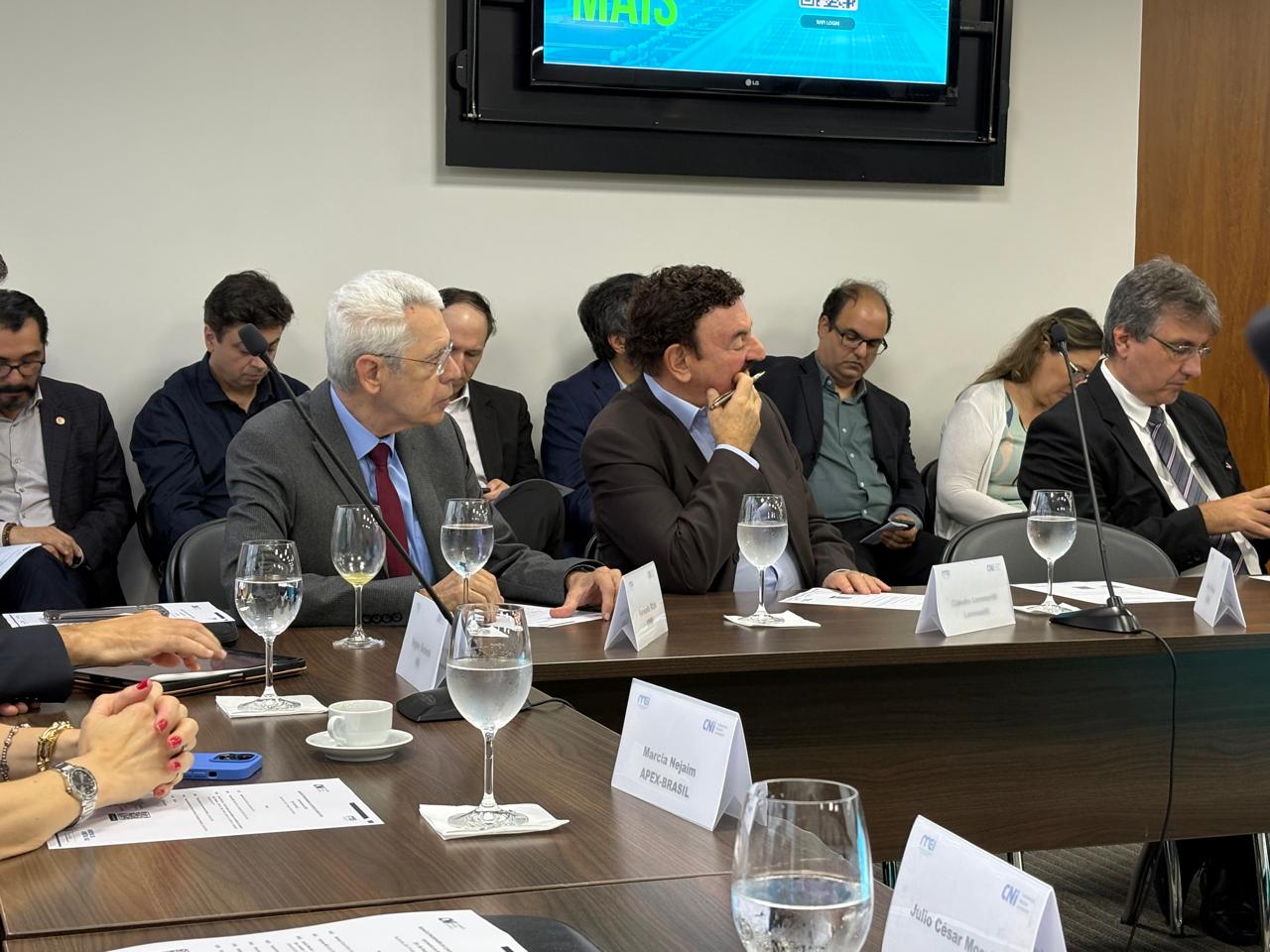
Diretor-presidente do CGEE, Fernando Rizzo, em reunião do Comitê de Líderes da Mobilização Empresarial pela Inovação (MEI)
The CEO of the Center for Management and Strategic Studies (CGEE), Fernando Rizzo, was present, last Friday (6), at the launch of the second round of public selection of actions for the More Innovation Program. The announcement of the calls for proposals was made by the Ministry of Science, Technology and Innovation (MCTI) and the Financing Agency for Studies and Projects (Finep) during the face-to-face meeting of the Committee of Leaders of the Business Mobilization for Innovation (MEI), in São Paulo - SP.
In total, there will be 13 calls for proposals and one call for the Knowledge Brazil Program, totaling R$ 3.3 billion in investments in structuring and mobilizing initiatives capable of promoting national reindustrialization with a focus on sustainability, technological autonomy, and reduced external dependence, generating jobs and income.
Brazilian companies of all sizes can participate if they have technological development proposals aligned with the thematic lines defined for the six strategic sectors of the New Industry Brazil (NIB). These sectors are: agro-industrial chains, health, infrastructure, digital transformation, energy transition, and national defense. Eligible items include personnel expenses, consulting services, equipment, and consumable materials.
“This government has an unwavering commitment to innovation, to equal opportunities among the diverse realities of our continental Brazil, to strengthening national industry, and to the sovereignty that elevates the country to higher levels in the world. We have a vocation to boost national production and we will follow this recipe that has yielded substantial results for the development of our productive and technological capacity,” stated Minister Luciana Santos.
These calls for proposals seek to support projects with a high degree of innovation, technological risk, and socio-economic relevance to the country, focusing on technological challenges considered priorities by the NIB, such as technologies for pharmaceutical inputs, fertilizers, artificial intelligence, batteries, energy transition, and critical minerals.
For proposal submission, it is mandatory that companies have partnerships with Scientific and Technological Institutions (ICTs). The objective is to stimulate the mobilization of the national innovation system, promoting integration among stakeholders, facilitating technology transfer, strengthening the competitiveness of companies, and boosting regional development through the generation and dissemination of knowledge.
“The purpose of this round of offering economic subsidies to companies is to contribute to fostering innovation, reducing regional asymmetries, promoting technology transfer, and strengthening national competitiveness, so that NIB's public policy achieves the expected results,” said the president of Finep, Luiz Antônio Elias.
In the previous cycle (2024/2025), the MCTI and Finep launched 13 calls for proposals for economic subsidies, with R$ 2.5 billion in non-refundable resources to boost innovative and high-risk technological projects. “More than 200 projects were contracted throughout the country, generating promising solutions that strengthen national competitiveness and accelerate technological transformation,” said the president of Finep. The projects also involved more than 400 partner companies, approximately 2,800 researchers—of whom more than 900 held master's or doctoral degrees—and more than 140 scientific and technological institutions.
During the event, the minister also announced the opening of a new round of the Conhecimento Brasil public selection process, which will now encompass not only repatriation but also the retention and attraction of leading researchers to the country. This initiative by Finep reinforces the commitment to valuing human capital and consolidating the national scientific base. The new call for proposals will make R$ 500 million available to boost knowledge generation and innovation.
Allocation of resources
Total: R$ 3.3 billion
R$ 500 million
Knowledge Brazil Program
R$ 500 million
Energy transition
R$ 300 million
Agro-industrial chains
R$ 300 million
Health and the so-called regional
R$ 300 million
Digital technologies
R$ 300 million
defense industrial base
R$ 300 million
Regional calls (North, Northeast and Midwest)
R$ 200 million
Mineral transformation
R$ 150 million
Circular economy and sustainable cities
R$ 150 million
National electrolyzer
R$ 120 million
Sustainable mobility
R$ 100 million
Semiconductors
R$ 60 million
Development of a tractor for family farming.
Source: with information from MCTI
Related news
Octi participa do 2º Seminário Monitoramento e Avaliação de Impacto para Políticas Industriais realizado pela Finep e CNI
11 of November, 2026A líder do Octi, Adriana Badaró, será apresentadora e moderadora da mesa do bloco 4 do encontro que discutirá o tema Comunicar resultados à sociedade.
CEO of CGEE participates in ceremony of the Parliamentary Front for the Machinery and Equipment Industry.
6 of October, 2025The ceremony highlighted the importance of cooperation between government, the productive sector, and research institutions in formulating policies for industrial development.