CGEE supports international climate debate with contributions towards the implementation of the BTIP.
23 of April, 2026
Share:
UN Brazil
The relevance of these contributions was highlighted by Secretary Pedro Ivo Ferraz da Silva, coordinator of Scientific and Technological Affairs at the Climate Department of the Ministry of Foreign Affairs, and the first Brazilian president of the UNFCCC's Executive Committee on Technology (TEC).
The Center for Management and Strategic Studies (CGEE) has contributed to advancing the international debate on the implementation of climate technologies, based on recent studies that support the operationalization of the Belém Technology Implementation Programme (BTIP), within the framework of the United Nations Framework Convention on Climate Change (UNFCCC).
The relevance of these contributions was highlighted by Secretary Pedro Ivo Ferraz da Silva, coordinator of Scientific and Technological Affairs at the Climate Department of the Ministry of Foreign Affairs. In April, he assumed the position to chair the Executive Committee on Technology (TEC) of the UNFCCC — the first time Brazil has held the presidency of the body, which plays a central role in the Technology Mechanism by producing analyses and recommendations on the development and transfer of technologies to address climate change.
According to the coordinator, Brazil has been dedicated to transforming international guidelines into concrete mechanisms for action. “Brazil has been working and reflecting extensively on how to operationalize the BTIP. Recent publications from CGEE should help us think about which mechanisms to create and which process arrangements to establish to effectively put into practice what was decided in Belém,” he stated.
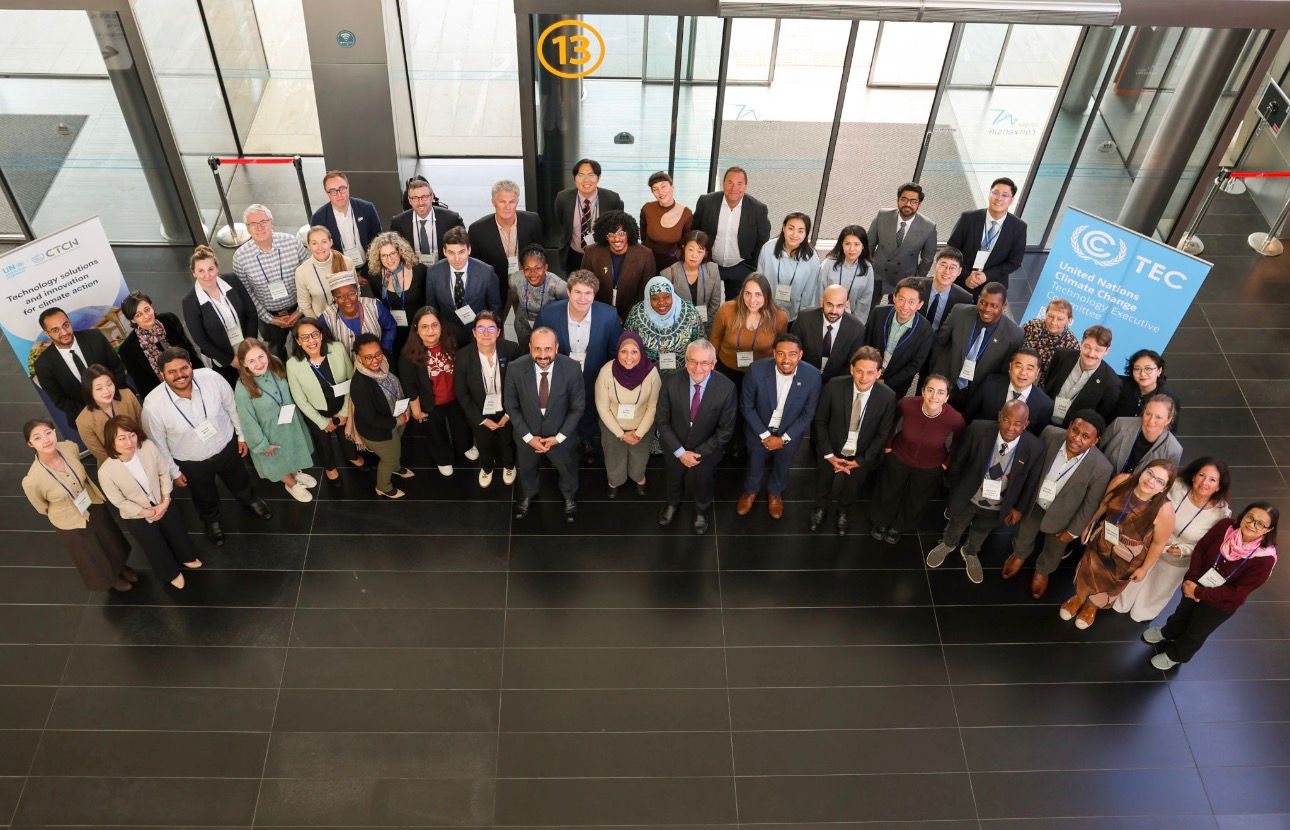
The statement was made during the meeting of the Technology Executive Committee (TEC), which also included meetings of the Climate Technology Center and Network (CTCN) and the joint meeting of the TEC and CTCN. The agenda included the participation of CGEE, represented by technical advisor Emilly Caroline.
The diplomat's statement refers to two documents recently released by CGEE, aimed at addressing the challenges of operationalizing the program.
One of them is the Discussion Paper entitled “A New Architecture for Climate Technology Implementation: The Belém Technology Implementation Programme (BTIP) in Practice” . The study presents a structured analysis of the ongoing institutional transformations and proposes ways to strengthen the effectiveness and coherence of the BTIP and the Climate Technology Centre and Network (CTCN), pointing to them as pillars of a phase more oriented towards the implementation of the Technology Mechanism.
The document stems from a recurring diagnosis in the climate field: the fragmentation between the stages of technology identification, technical assistance, financing, and large-scale implementation. The proposal aims to advance the integration of these elements to increase the effectiveness of policies.
The Position Paper prepared by CGEE proposes a more integrated operational architecture driven by the demands of countries. Among the suggestions are the creation of technology portfolios, matchmaking mechanisms, and an implementation accelerator, with the aim of connecting technical assistance to the feasibility of fundable projects and scaling up climate solutions.
For Pedro Ivo, this type of technical contribution is fundamental to giving concrete form to international commitments. In the coordinator's assessment, the challenge now is precisely to transform guidelines into institutional arrangements and instruments capable of supporting large-scale implementation.
Related news
CGEE drives the Green Industrial Transition with a focus on financing and bioindustry.
26 of November, 2025TVI project combines science, innovation and funding to strengthen the sustainable bioeconomy.
Results from the 3rd ICID are presented at COP30 in panels at the House of Science.
26 of November, 2025ICID III reinforces debates on drylands and desertification at COP30.
Experts point to solutions to increase technological advances in the Amazon.
25 of November, 2025The debate demonstrated how sustainable policies and the knowledge produced by universities respond to social and climate challenges.