Anderson Gomes, CEO of CGEE, advocates for strategic governance as a means for Brazil to competitively integrate into the global market.
27 of March, 2026
Share:
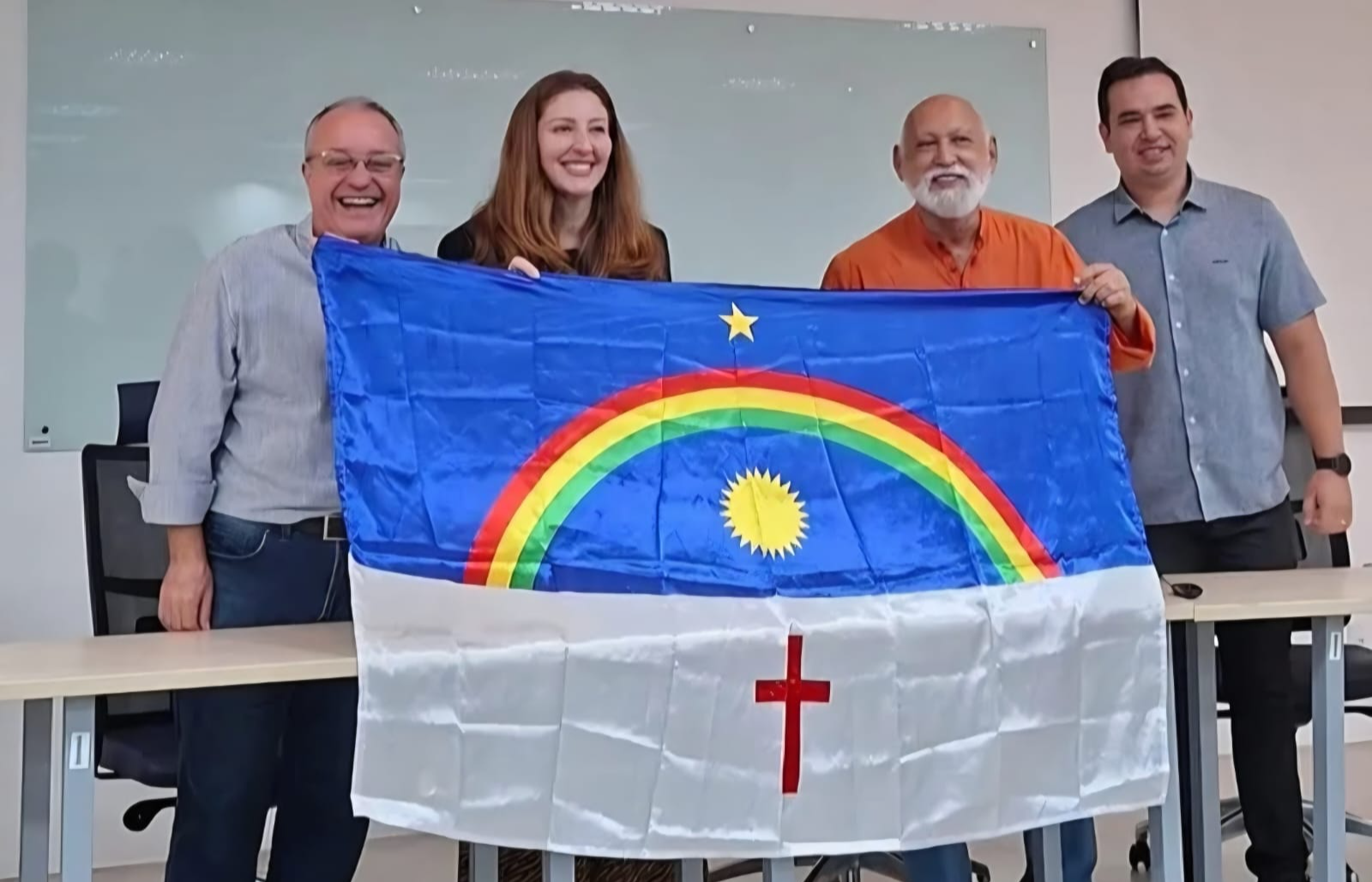
CGEE reinforces the role of governance and institutional coordination in integrating science, industry, and technology to strengthen sovereignty and innovation in the health sector.
Encontro reuniu especialistas para discutir caminhos para reduzir a dependência externa e impulsionar o Complexo Econômico-Industrial da Saúde.
The CEO of CGEE, Anderson Gomes, participated today (27) in the iCEIS Talk debate on “Future of the Brazilian Health Industry: between manufactured products and digital products”, held at Porto Digital, in Recife (PE). The director highlighted the need for strategic governance capable of positioning the country more competitively in the global scenario.
In opening the presentations, Gomes reminded the audience that governing rare earth elements would mean creating an efficient "bridge" between science and the market, preventing Brazil's mineral potential from being exploited in a fragmented way by external interests. According to him, the country needs to establish an effective position to deal with these resources.
"In rare earth elements, Brazil has scientific expertise, it has reserves, the second largest in the world... The problem is that we don't know how to govern. And what is the strategy for this rare earth element for the guys coming from abroad?" he asked.
In addition to Gomes, also present were the leader of the Network and Research Group on Sustainable Development, Science, Technology & Innovation and the Economic-Industrial Complex of Health (GPCEIS - Fiocruz), Carlos Gadelha; and the president of Datamétrica Consultoria, Pesquisa e Telemarketing, Alexandre Rands. These experts brought different perspectives on the challenges and opportunities involved in the integration between industry, science, technology and digital solutions in the health sector.
The event deepened discussions on innovation in healthcare regarding the future of the Health Economic-Industrial Complex in Brazil (CEIS). The head of CGEE highlighted CEIS as a successful example of integration between science, technology, and the productive sector, and one that should be replicated in other areas. According to him, "initiatives such as Embrapii and territorialization strategies are fundamental to transforming knowledge into market innovation."
In concluding his speech, Gomes emphasized CGEE's commitment to assisting in the formulation of this national strategy with its methodologies, observatories, and researchers. "The Center for Management and Strategic Studies (CGEE) is available for us to study, understand what the next steps are, and discover what that is together," he stated.
The full debate is available at: https://www.youtube.com/live/YwD2RlcwuOo