CGEE presents the 2023 Public Perception of Science, Technology & Innovation Survey at Ricyt, Uruguay.
25 of November, 2025
Share:
Octi leader, Adriana Badaró, participates in panel at the meeting this Tuesday (25).
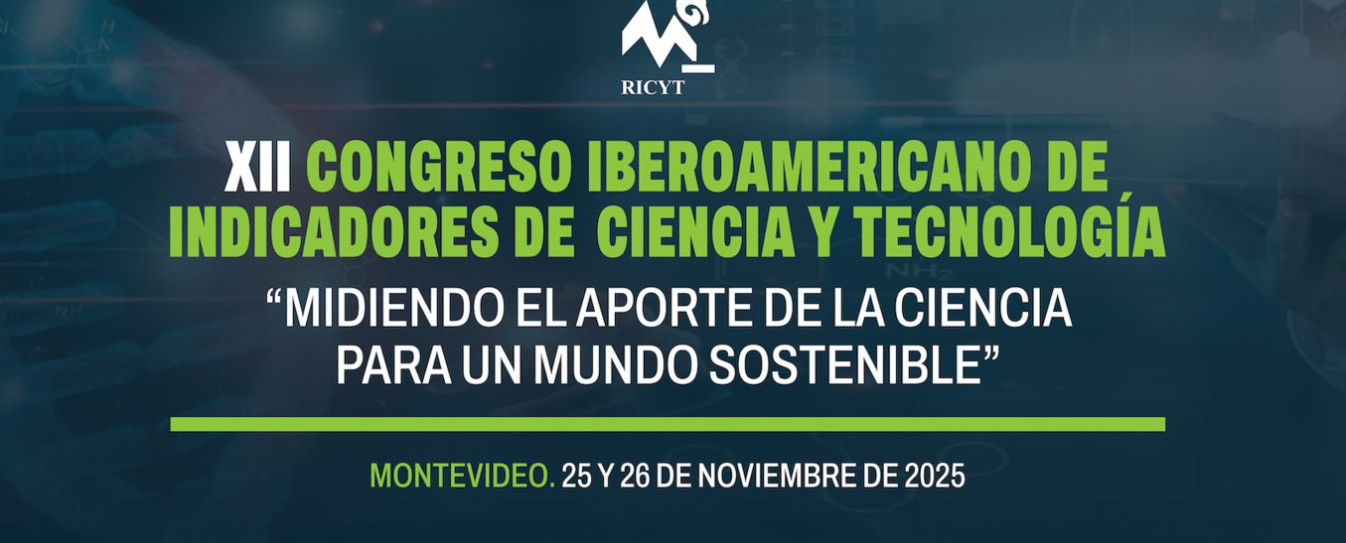
The Center for Management and Strategic Studies (CGEE) is participating, through the Observatory of Science, Technology and Innovation (Octi), in the XII Ibero-American Congress of Science and Technology Indicators of the Ibero-American Network of Science and Technology Indicators (Ricyt). The event, which this year has the theme “Measuring the Contribution of Science to a Sustainable World”, will take place in Montevideo, Uruguay, this Tuesday (25) and Wednesday (26).
Octi leader Adriana Badaró will participate in the program, starting at 11:30 am, in the panel "Changes in the perception and social appropriation of science and technology in the age of misinformation". The session will also include presentations by Lucía Monteiro- ANII (Uruguay); Cecilia Cejas - Sicyt (Argentina); Efrén Romero- OcyT (Colombia); Camilo Figueroa- Concytec (Peru). The moderator will be Nathalie Alderete- Conacyt (Paraguay). Badaró participated yesterday (24) in a meeting of the event's Technical Committee, along with the delegation from the Ministry of Science, Technology and Innovation (MCTI), which is at the event.
Badaró will present as a success story the sixth round of the research "Public Perception of Science, Technology & Innovation in Brazil," conducted by CGEE at the request of MCTI in 2023. The aim of this edition was to continue monitoring the population's view, interest, and level of information regarding science and technology (S&T). The research was carried out in partnership with the National Institute of Public Communication of Science and Technology (INCT-CPCT) and the Brazilian Society for the Advancement of Science (SBPC).
Among the topics researched and to be presented at Ricyt is also the perception of Brazilians regarding disinformation and fake news in the country. The aim is to understand people's self-identification on the subject and the sharing of news, as well as to measure trust in information sources.
Badaró points out that misinformation is structural, not episodic. “It’s not enough to combat fake news. It’s necessary to promote scientific and media literacy. Misinformation can weaken trust in science and institutions. Knowledge gaps fuel false narratives and unscientific beliefs,” she states, according to the research results.
Ricyt is organized by the Ibero-American Observatory of Science, Technology and Society of the Organization of Ibero-American States (OEI), the Uruguayan National Research and Innovation Agency (ANII), the Inter-American Development Bank (IDB), and the Latin American Network of Innovation Agencies (Relai).
Related news
CGEE apresenta indicadores de especialização científica do Brasil durante a ExpoT&C/SBPC
30 of July, 2026Palestra realizada na ExpoT&C, durante a 78ª Reunião Anual da SBPC, apresentou novos indicadores de especialização científica desenvolvidos pelo Octi.
CGEE publica Informe OCTI sobre especialização científica e futuro da CT&I brasileira
23 of July, 2026Publicação reúne indicadores sobre a produção científica brasileira e permite identificar áreas de destaque, lacunas e oportunidades de cooperação internacional.
The launch of a technical note on digital sovereignty will take place in a webinar promoted by CGEE.
28 of May, 2026The Digital Technologies Observatory (OTD) initiative at the Center seeks to promote a qualified dialogue between experts, public managers, and the community interested in digital policies and science, technology, and innovation.