Brazil presents a national strategy to promote Nature-Based Solutions in municipalities.
24 of November, 2025
Share:
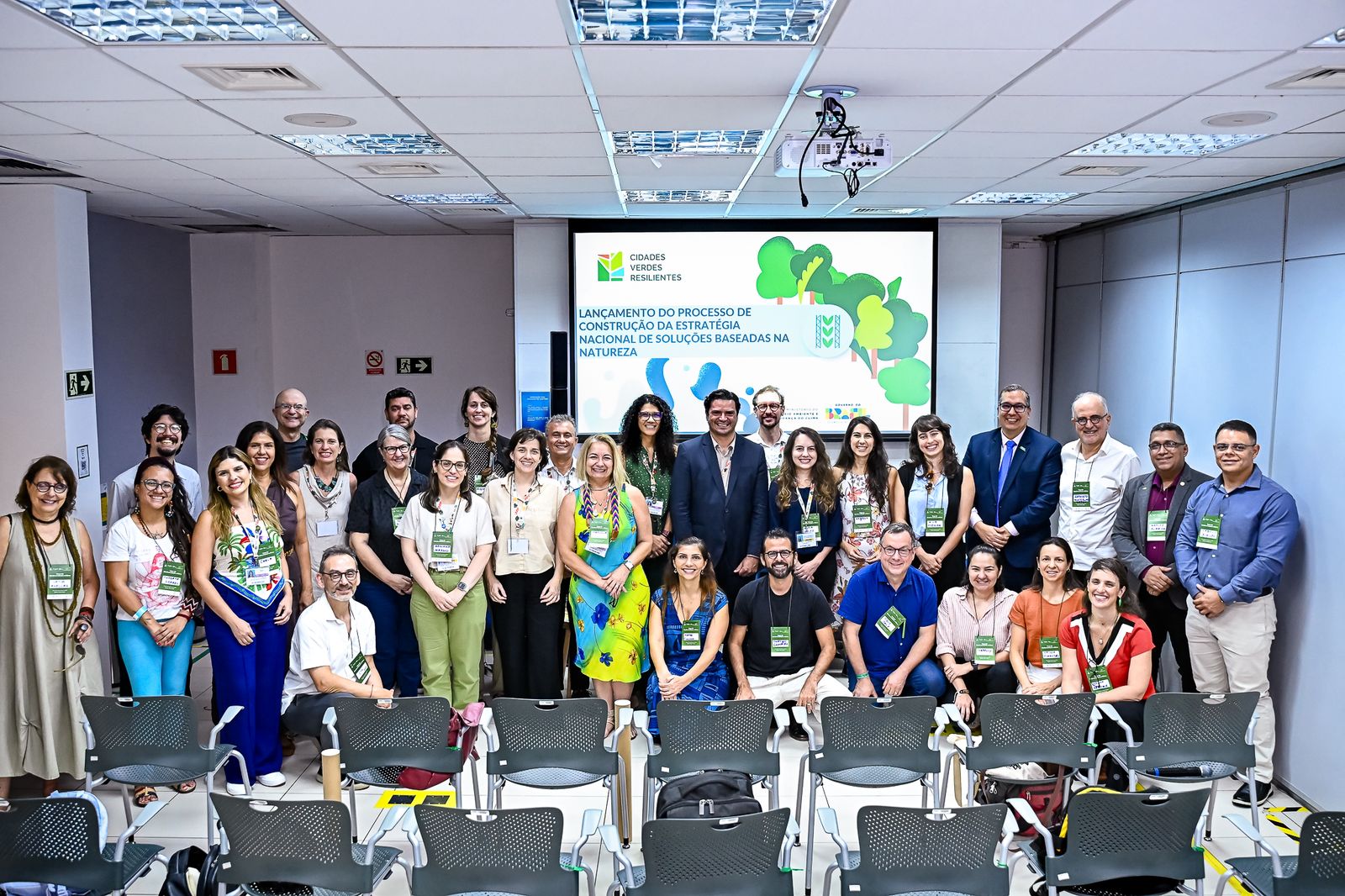
Discussions at COP30 highlight the importance of Nature-Based Solutions in guiding public policies and strengthening urban resilience in Brazil.
The construction of more resilient, green, and inclusive cities was at the heart of the discussions at the roundtable “The Brazilian strategy to accelerate urban Nature-Based Solutions (NbS),” held at the Vale Technological Institute – Sustainable Development (ITV-DS) building in Belém, during COP30. The meeting brought together experts, public managers, and researchers to discuss the challenges and pathways for implementing NbS in the Brazilian urban context.
The Center for Management and Strategic Studies (CGEE) was represented on the panel by technical advisor Nuria Brito, who sat alongside Adalberto Maluf, National Secretary for Urban Environment, Water Resources and Environmental Quality of the Ministry of the Environment (MMA); Sâmia Sulaiman, General Coordinator of Articulation and Partnerships of the Ministry of Cities; Paul Dale, Coordinator of the Biodiversity Technical Chamber of ABEMA; Ângela Guirao, representative of Anamma Mulheres and the Municipality of Campinas; and Mila Avellar Montezuma, researcher at TU Delft and UNESCO IHE Delft. The event was moderated by Maurício Guerra, Director of Urban Environment of the Ministry of the Environment and Climate Change (MMA).
The roundtable, in addition to presenting the process of building the National Strategy for Nature-Based Solutions, a milestone for the country, discussed the paths and challenges of the strategy, highlighting how these instruments, combined with social engagement, can promote green, inclusive and resilient cities.
“The big question is: how to transform studies, catalogs, project databases, and recommendations into policies that guide the territory? The National Strategy for Nature-Based Solutions must fulfill this guiding role through coordinated action, and CGEE will work towards a successful outcome in this direction throughout 2026,” Nuria highlighted.
In contextualizing the strategy, the panelists emphasized that Brazil is experiencing a historical process of accelerated and unequal urbanization, which amplifies socio-environmental vulnerabilities. According to AdaptaBrasil (2024), an alarming number of municipalities already have areas subject to climate risk, which requires coordinated action and integrated public policies. To address these issues, it is crucial to adopt sustainable development strategies, considering the specific needs of the territory and its population, in order to implement efficient and integrated public policies for urban, environmental, and climate development.
“We are experiencing a moment of strong collaboration between different actors around the Nature-Based Solutions agenda. Governments, NGOs, the private sector, financial institutions, and civil society have been coming together to build a common field of action,” stated the representative from CGEE.
Nature-based solutions (NbS) are innovative practices that utilize natural processes and resources to address urban challenges, such as stormwater management, temperature control in densely populated areas, and the expansion of green spaces. At the same time, they promote social, economic, and environmental benefits, strengthening the resilience of Brazilian cities.
CGEE has expanded its activities in this field through initiatives such as the International Seminar on Nature-Boundary Solutions (NBS), which has already had five editions bringing together national and international experts to discuss typologies, applications and opportunities for adopting these solutions in Brazil, and a thematic Observatory.
“CGEE has played a structuring role in the Nature-Based Solutions agenda, especially through the Innovation Observatory for Sustainable Cities (OICS). The Observatory has systematized solutions, compiled case studies, developed territorial indicators, and produced publications that are now a reference for managers,” explained Nuria.
According to the event's announcement, although it is an intuitive term that allows the general public to associate the concept with an idea, the term is a broad umbrella encompassing different ecosystem approaches and pre-existing actions with different names. By institutionalizing a national public policy focused on Sustainable Biodiversity Systems (SBNs), Brazil innovates in the formulation of a comprehensive and unified sustainable strategy for urban and peri-urban territorial planning and reinforces its global leadership in building a regenerative, resilient, and socially just economy.
Related news
CGEE supports international climate debate with contributions towards the implementation of the BTIP.
23 of April, 2026The relevance of these contributions was highlighted by Secretary Pedro Ivo Ferraz da Silva, coordinator of Scientific and Technological Affairs at the Climate Department of the Ministry of Foreign Affairs, and the first Brazilian president of the UNFCCC's Executive Committee on Technology (TEC).
CGEE drives the Green Industrial Transition with a focus on financing and bioindustry.
26 of November, 2025TVI project combines science, innovation and funding to strengthen the sustainable bioeconomy.
Results from the 3rd ICID are presented at COP30 in panels at the House of Science.
26 of November, 2025ICID III reinforces debates on drylands and desertification at COP30.