From uranium to niobium, lessons for Brazil regarding rare earth elements.
31 of August, 2026
Share:
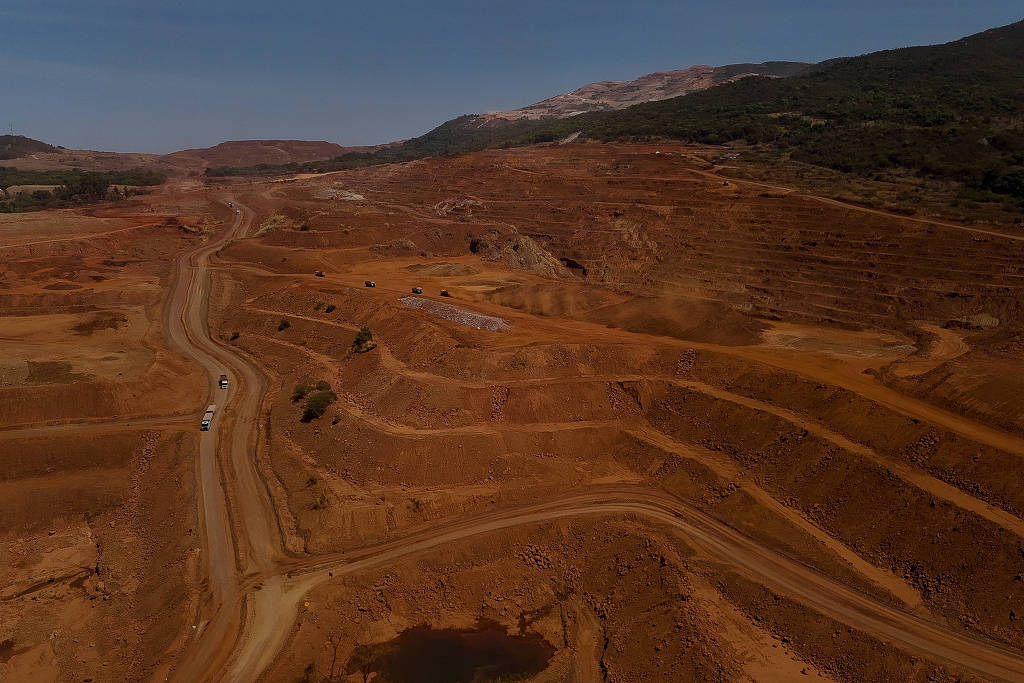
Pedro Ladeira - Aug. 22, 2025 / Folhapress
Despite its substantial resources, the country lacks an ecosystem that connects universities, government, and financial institutions. The challenge is to build a framework that stimulates mineral production and encourages the internalization of technological capabilities.
After World War II, Brazil turned to the peaceful use of nuclear energy, driven by scientists such as Cesar Lattes, Mário Schenberg, and José Leite Lopes, as well as Admiral Álvaro Alberto, who were attentive to the strategic value of the monazite sand off the coast of Espírito Santo and Bahia. In 1946, the Dutra government created the Atomic Energy Commission, the embryo of the current CNEN (National Nuclear Energy Commission), to study and control "atomic minerals."
Difficulties soon arose. The US and the UK pressured Brazil for access to monazite, which was largely exported without technological counterpart—some of it taken as "ballast" in cargo ships without authorization. This experience contributed to the creation of the CNPq (National Council for Scientific and Technological Development) in 1951 and consolidated the perception that scientific and technological independence is a condition of sovereignty. In the following years, the country created the Institute of Atomic Energy and built the IEA-R1 reactor.
In the 1970s, the nuclear program gained new scale. Angra 1 was implemented with Westinghouse technology and imported fuel. The Brazil-Germany Nuclear Agreement of 1975 foresaw eight power plants and technology transfer, but external pressures, economic difficulties, and limitations of the negotiated technology frustrated a large part of its objectives.
In response to foreign dependence, the Navy initiated a program in 1979 to master the nuclear fuel cycle. In Aramar (SP), under the leadership of Othon Luiz Pinheiro da Silva, uranium ultracentrifugation technology was developed. Today, INB operates from mining in Caetité (BA) to enrichment in Resende (RJ), and the implementation of conversion to UF₆ will allow for the complete mastery of the nuclear fuel cycle.
Another success story is niobium, of which Brazil holds about three-quarters of the world's reserves. In Araxá (MG), CBMM (Companhia Brasileira de Metalurgia e Mineração) has developed, over decades and in collaboration with universities, expertise ranging from mining and beneficiation to metallurgy, process engineering, R&D ("research and development") and application development. This accumulation of knowledge has allowed the country to achieve a leading position worldwide not only in production, but also in the technology associated with this strategic mineral.
Uranium and niobium demonstrate that Brazil possesses the scientific, technological, and entrepreneurial capacity to extract more than just mineral income from its resources. The issue reappears now with rare earth elements—17 elements essential to wind turbines, electric motors, optical fibers, defense systems, and medical equipment. Despite its significant resources, the country still lacks an ecosystem that connects universities, research centers, government, financial agents, and companies, advancing from mining and separation to refining, metallurgy, and high-tech devices.
In this context, Bill 2,780/2024, approved by the Chamber of Deputies and currently in the Senate, represents an important step forward. By establishing a National Policy for Critical and Strategic Minerals, it seeks to stimulate research, processing, transformation, and value addition, and provides for a national coordination body linked to the Presidency of the Republic. However, the bill needs improvement, as it currently does not establish sufficient obligations to enforce the processing of minerals before exporting them.
The challenge for the National Congress is to build a framework that stimulates mineral production and progressively induces the internalization of technological capabilities. For strategic supply chains, this requires value-added targets and national dominance in processes, engineering, critical equipment, suppliers, and human resources, coupled with verifiable financing, incentives, and commitments.
It is equally necessary to bring together government, businesses, universities, research institutes, and financial agents around missions, goals, and indicators. The objective should be to transform Brazil's geological advantage not only into mineral production and income, but also into lasting knowledge, industrial capacity, and technological expertise.
Anderson Gomes
Celso Pinto de Melo
Cid Bartolomeu de Araújo
Sergio Machado Rezende
Full Professors in the Department of Physics at the Federal University of Pernambuco - UFPE
This article was originally available in Folha de S. Paulo.
Related news
To avoid becoming dependent on GPS.
13 of October, 2026In an article published in O Globo, the CEO of CGEE, Anderson Gomes, articulates the importance of mastering the Positioning, Navigation and Time (PNT) system, which enables telecommunications services, financial systems, precision agriculture, air transport, logistics and energy.
Brazil and critical minerals after the new framework.
5 of October, 2026Only regulation will determine whether a country will transform mineral wealth into technology and sovereignty.
Rare professionals: industrialization alone is not enough; the country needs workers who can transform minerals into technology.
14 of September, 2026In an article published in CartaCapital, the CEO of the Center for Management and Strategic Studies (CGEE), Anderson Gomes, discusses one of the bottlenecks for Brazil's progress in this area: the training of specialized human resources.