At COP30, the Ministry of the Environment launches the development of a National Strategy for Nature-Based Solutions.
21 of November, 2025
Share:
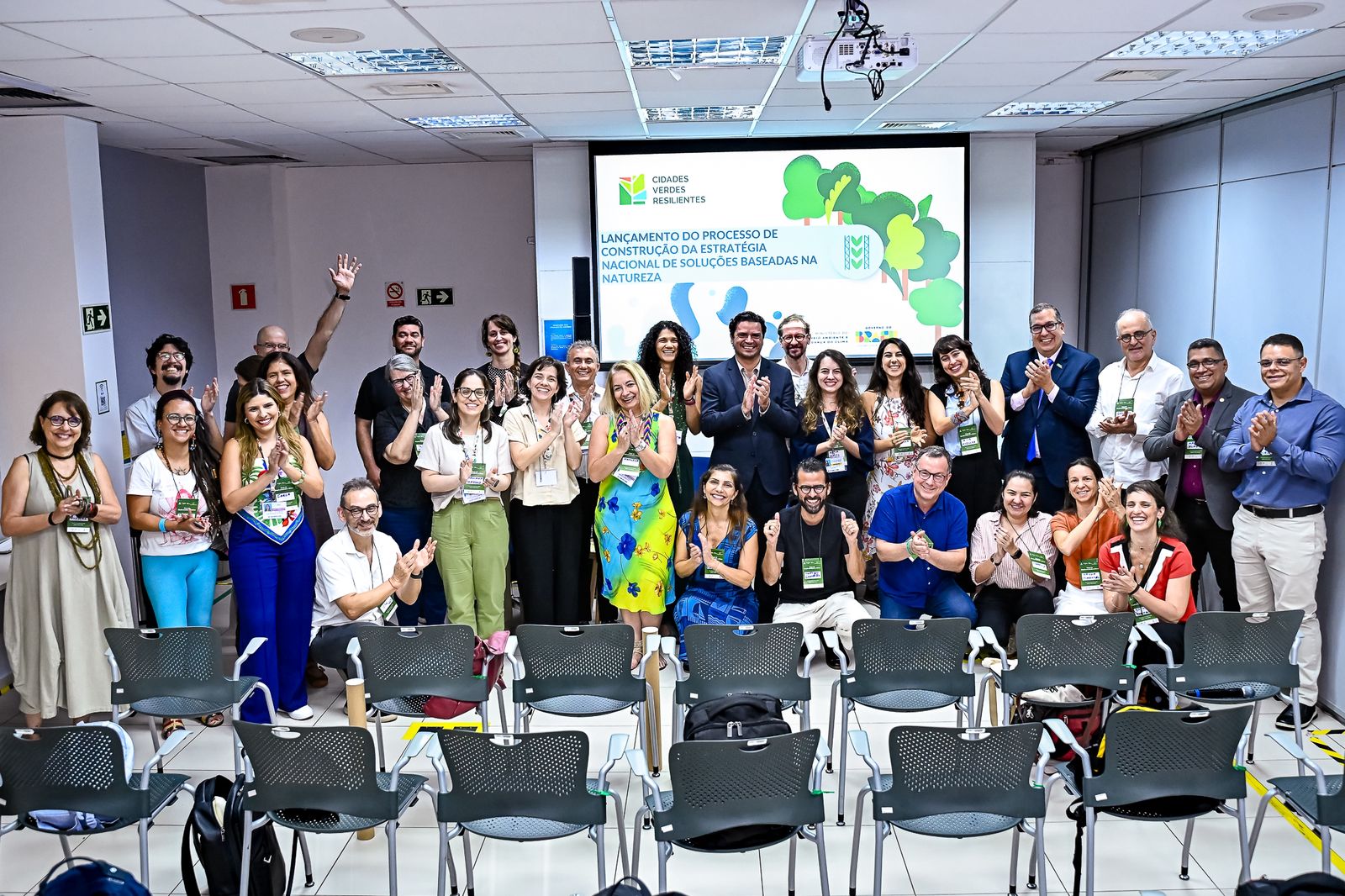
This initiative will guide the integration of nature into urban planning; the goal is to have the document ready for the next COP in 2026.
The Ministry of Environment and Climate Change (MMA) took a fundamental step to strengthen the integration of nature into urban planning and the country's climate agenda with the launch of the process to build the National Strategy for Nature-Based Solutions (NbS). The announcement was made in Belém (PA), last Tuesday (November 18), by the National Secretary for Urban Environment, Water Resources and Environmental Quality, Adalberto Maluf, at an event organized by the Brazilian Association of State Environmental Entities (Abema), at the House of Biodiversity and Climate, during COP30.
The launch of the participatory strategy-building process highlights a historic effort involving academic and research centers and subnational governments. This collaboration includes, for example, the Center for Management and Strategic Studies (CGEE) of the Ministry of Science, Technology and Innovation (MCTI), and the Federal University of Alagoas. The goal is to have a strategic document ready for the next climate conference. “From COP to COP, we will have our National Biodiversity Strategy,” Maluf emphasized.
The initiative is part of the Resilient Green Cities Program (PCVR) , which seeks multi-level institutional coordination. "The program, by attempting to integrate the urban, environmental, climate, scientific, and technological agendas, allows for a multi-level institutional coordination that is fundamental for the future of the country," explained the secretary. One of the program's goals is for 17.5% of municipalities to have implemented Nature-based Solutions (NbS) by 2035.
“We can only pursue true emissions neutrality and resilience with nature at the center of climate action. And this is the purpose of establishing the National NbS Strategy as a public policy,” stated the Director of Urban Environment at the Ministry of the Environment (MMA), Maurício Guerra, one of the coordinators and executive secretary of the PCVR Management Committee.
During a debate held at the launch event, the Municipal Secretary of Climate of Campinas (SP), Braz Adegas Júnior, highlighted initiatives implemented in the municipality, such as urban microforests, wildlife crossings, linear parks, and rural sanitation actions. "By participating in the launch of the participatory construction of the strategy, we reaffirm our willingness to co-create policies that place nature at the center of urban solutions," he said.
“For Brazilian municipalities, the launch of this initiative is a strategic opportunity to contribute to the construction of national guidelines that strengthen local capacity to face climate challenges, expanding the use of NbS as pillars of sustainable urban development,” pointed out the representative of the National Association of Municipalities and Environment (Anamma) Women, Ângela Guirao, who also participated in the debate.
“The MMA’s actions help build a scenario of better, faster, and more coordinated responses. In a country with the importance and size of Brazil, the integration of territorial scales in relation to climate, biodiversity, and desertification control agendas is essential. Nature-based societies (NbS) are the main instruments for harmonizing these agendas,” highlighted Paul Dale, coordinator of the Biodiversity Technical Chamber of Abema and host of the event.
Also participating in the ceremony were the general coordinator of Articulation and Partnerships of the Ministry of Cities, Sâmia Sulaiman, the advisor to CGEE and the Observatory of Innovation for Sustainable Cities (OICS), Núria Brito, and the professor and doctor from the Delft University of Technology in the Netherlands, Mila Montezuma.
Sustainable and resilient urban development
The rationale for this initiative lies in the growing vulnerability of urban areas to climate impacts, such as floods and heat islands, and in the need for solutions that reconcile efficiency, low cost, and social benefits. Nature-bought solutions offer alternatives that reduce risks, increase resilience, and contribute to socio-environmental equity.
Maluf highlighted that the effort in NbS is complemented by other initiatives of the federal government. In financing, for example, the National Climate Change Fund (Climate Fund) has made R$ 10 billion available for adaptation projects in cities focused on NbS, offering interest rates of 1% per year.
The secretary acknowledged that, while public funding is vital, it is necessary to consider new solutions, citing as an example the construction of linear and urban parks as counterparts to private investments. Maluf also mentioned the PCVR Project Bank – which received 92 SbN projects out of the 257 eligible projects registered – and the Resilient Green Peripheries call for proposals, which revealed a great demand for SbN in urban peripheries. In total, 11 projects were selected in the call for proposals, totaling an investment of R$ 25.3 million from the federal government and the Climate Fund.
Source: Ministry of Environment and Climate Change
Related news
CGEE supports international climate debate with contributions towards the implementation of the BTIP.
23 of April, 2026The relevance of these contributions was highlighted by Secretary Pedro Ivo Ferraz da Silva, coordinator of Scientific and Technological Affairs at the Climate Department of the Ministry of Foreign Affairs, and the first Brazilian president of the UNFCCC's Executive Committee on Technology (TEC).
CGEE drives the Green Industrial Transition with a focus on financing and bioindustry.
26 of November, 2025TVI project combines science, innovation and funding to strengthen the sustainable bioeconomy.
Results from the 3rd ICID are presented at COP30 in panels at the House of Science.
26 of November, 2025ICID III reinforces debates on drylands and desertification at COP30.