National policy for critical and strategic minerals is approved by the Federal Senate.
8 of September, 2026
Share:
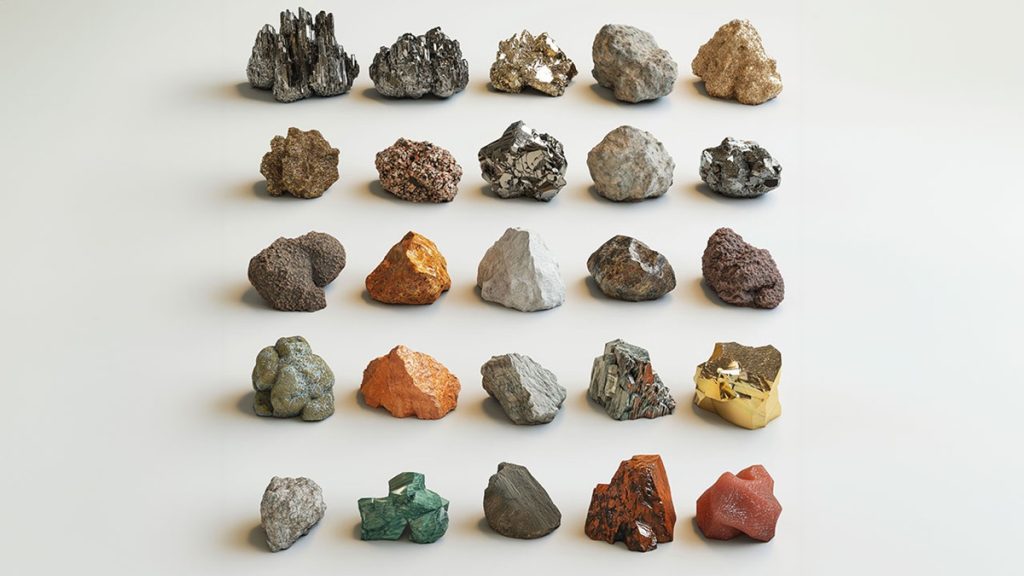
The text, which now goes to the president for approval, is addressed in the study "Rare Earths in Brazil: State of the art, scenarios and a strategic roadmap for 2026-2040," by CGEE.
The first step towards creating a rare earth supply chain in Brazil has been taken. The creation of a National Policy for Critical and Strategic Minerals (PNMCE) is one of the objectives of the Bill ( PL 2780/2024 ) approved last Wednesday (2) by the Federal Senate. The text is now awaiting presidential approval. The recent study published by the Center for Management and Strategic Studies (CGEE), Rare Earths in Brazil: State of the art, scenarios and a strategic roadmap for 2026-2040 , directly cites the Bill as one of the pillars to compose the Strategic Roadmap of the integrated Rare Earth Supply Chain in Brazil: 2026-2040.
In addition to establishing a National Policy, the project creates the National Council for the Industrialization of Critical and Strategic Minerals (CIMCE), linked to the Presidency of the Republic. The proposal aims to promote research, extraction, processing, and transformation of critical and strategic minerals, essential for key sectors of the economy, such as the energy transition and national security. It also amends several laws to integrate and strengthen the production chain of these minerals in Brazil. Beyond what is foreseen in the project, the study of rare earth elements addresses a window of opportunity that Brazil should embrace in the next four years.
The CGEE document highlights the need for measures to build a specific legal framework for rare earths as the most urgent institutional priority for the period 2026–2028. Among the measures pointed out in the Center's study are: the inclusion of integrated licensing with a maximum term of three years, progressive beneficiation targets, the creation of the National Council for Critical and Strategic Minerals (CNMCE) and the Sovereign Fund for Critical Minerals (FSMC) by law, and sovereign minimum price mechanisms in bilateral agreements.
From the perspective of the strategy formulated in the document, the approval of Bill 2780/2024 represents the first substantial legislative advance since the beginning of the strategic window identified here, and also the first empirical test of how closely the National Congress and the Executive Branch converge with the public policy recommendations summarized in the Strategic Roadmap. However, the proposal that is now awaiting presidential approval leaves open some important questions whose resolutions are conditions for competitiveness and access to higher-value markets, and which may still be debated later.
“The bill is, objectively, an important institutional advancement. The approved text incorporates a large part of the strategic architecture advocated by CGEE — value aggregation, industrialization, science, technology, innovation, human resource development, financial instruments, and safeguards of sovereignty. However, the convergence is uneven: the largest remaining gaps lie in the institutionalization of roadmaps by supply chain, the explicit recognition of critical capabilities, and more systematic, measurable, and results-linked counterparties. These points largely shift to the regulation and implementation of the new policy. At the same time, the distinctive contribution of CGEE documents remains relevant. The law provides the architecture; what remains is to transform this architecture into differentiated strategies by supply chain. It is in this transition — from the law to the National Plan, the roadmaps, the selection of projects, and the regulations — that the notions of critical capacity, counterparties, goals, and technological sovereignty can gain operational content. Therefore, the challenge continues,” states the CEO of CGEE, Anderson Gomes.
Rare earths and critical minerals
Although often associated, the concepts of critical minerals, strategic minerals, and rare earth elements are not synonymous. Critical and strategic minerals are those considered essential for economic and technological development and national security, whose supply chains may be subject to risks of scarcity or external dependence.
Rare earth elements, the subject of the CGEE study, are part of this group, but constitute a specific group of 17 chemical elements: the 15 lanthanides, in addition to scandium and yttrium, present in minerals such as monazite, xenotime, bastnasite, and ionic clays. Due to their magnetic, optical, and electrical properties, these elements are fundamental to the production of advanced technologies, such as high-performance magnets, batteries, catalysts, and electronic equipment, as well as having strategic applications in defense systems. Thus, rare earth elements can be classified as critical and strategic minerals, but not all critical and strategic minerals, such as lithium, cobalt, graphite, nickel, and niobium, are rare earth elements.
Related news
CGEE supports Fulbright–CNPq Mission on Rare Earths and Critical Minerals
21 of October, 2026The initiative involved the participation and collaboration of CGEE and researchers from seven Brazilian institutions.
CGEE promove debate sobre o papel do Brasil nas cadeias globais de terras raras durante a SBPC 2026
28 of July, 2026Agenda destacou oportunidades e desafios para agregar valor às terras raras no Brasil.
CGEE lança estudo sobre terras raras e caminhos para ampliar a presença do Brasil na cadeia global
30 of June, 2026Lançamento será amanhã (1º), durante o 7º Seminário de Terras Raras, realizado pelo Centro de Tecnologia Mineral (Cetem), na sede da Universidade Federal do Rio de Janeiro (UFRJ).