Rare earths: Brazil between mineral wealth and technological power.
17 of August, 2026
Share:
Maurenilson Freife
The crucial question is not how much ore the country possesses, but what it intends to do with it. This time, there is the possibility of transforming geological advantages into knowledge, technology, and industrial capacity.
For decades, Brazil has been accustomed to measuring its wealth by the abundance of its natural resources. Iron ore, oil, soybeans, and other commodities have consolidated an economy integrated into international trade. This model has brought gains, but also a recurring question: why do countries rich in natural resources not always manage to transform this wealth into technological and industrial development? The emergence of critical minerals, especially rare earth elements, reframes this question in new terms.
Present in wind turbines, electric vehicles, medical equipment, and electronic devices, these elements have become indispensable to the 21st-century economy. Therefore, they are integral to the industrial strategies of major economies. The competition involves not only access to minerals, but also industrial capabilities, technological dominance, knowledge, and strategic autonomy.
This is perhaps the main paradigm shift that Brazil needs to understand. The true strategic asset is not mineral reserves, but the capacity to transform them into products, technology, skilled jobs, and international integration. Exporting concentrates may generate revenue, but it rarely changes a country's position in global value chains. The greatest value lies in processing, refining, advanced materials, and final products.
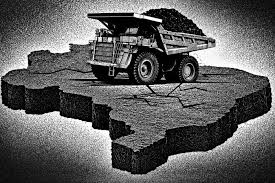
The numbers illustrate the challenge. Brazil holds approximately 25% of the world's known rare earth reserves, the second largest share on the planet, behind only China. In 2024, however, it accounted for approximately 0.15% of global production and had no participation in refining. China concentrated 91% of this stage. The gap between these indicators shows that mineral abundance and industrial capacity are not synonymous. Brazil's advantage remains underground, while the most valuable stages are carried out outside the country.
Brazil possesses expertise in mining and engineering, and a science and technology system capable of supporting innovation processes. At the same time, it faces low refining capacity, reduced industrial integration, and limited appropriation of added value. If it remains restricted to exporting raw materials, it may once again occupy a peripheral position. If it develops capabilities along the supply chain, it can transform a geological advantage into a lasting competitive advantage. This choice is what differentiates a mineral policy from a development strategy.
The topic is already part of the national science, technology, and innovation agenda. The National Science, Technology and Innovation Strategy 2024-2034 recognizes strategic and critical minerals as a priority area. In this context, the Center for Management and Strategic Studies (CGEE), overseen by the Ministry of Science, Technology and Innovation, coordinated the study "Rare Earths in Brazil: State of the art, scenarios and a strategic roadmap for 2026-2040".
This opportunity will not remain open indefinitely. As investments and industrial alliances advance, the cost of late entry increases. Brazil, however, can still choose its position in the supply chain before it is consolidated.
The debate on rare earth elements is therefore not limited to mining. The crucial question is not how much ore the country possesses, but what it intends to do with it. This time, there is the possibility of building a different trajectory: transforming geological advantages into knowledge, technology, and industrial capacity. This choice will define Brazil's place in a strategic chain for the 21st-century economy.
Anderson Gomes - Physicist, CEO of the Center for Management and Strategic Studies (CGEE).
Article from CGEE published in Correio Braziliense .
Related news
To avoid becoming dependent on GPS.
13 of October, 2026In an article published in O Globo, the CEO of CGEE, Anderson Gomes, articulates the importance of mastering the Positioning, Navigation and Time (PNT) system, which enables telecommunications services, financial systems, precision agriculture, air transport, logistics and energy.
Brazil and critical minerals after the new framework.
5 of October, 2026Only regulation will determine whether a country will transform mineral wealth into technology and sovereignty.
Rare professionals: industrialization alone is not enough; the country needs workers who can transform minerals into technology.
14 of September, 2026In an article published in CartaCapital, the CEO of the Center for Management and Strategic Studies (CGEE), Anderson Gomes, discusses one of the bottlenecks for Brazil's progress in this area: the training of specialized human resources.